
Washington County Arrest Warrants Explained
An arrest warrant is a judge's written order. It lets officers take a named person into custody. Arkansas courts issue one on reasonable-cause information, often supplied through an affidavit, recorded testimony, or another sworn source. Reasonable cause means enough facts for a judicial officer to conclude that an offense occurred and the named person may be responsible. Felony warrants in Washington County come from the Arkansas Circuit Court, Fourth Judicial Circuit, criminal divisions. Washington County district-court departments handle misdemeanors, local offenses, traffic matters, and preliminary felony proceedings. The Arkansas District Court Benchbook explains issuance. The Arkansas court forms collection shows the order itself. Once signed, the order moves to an authorized agency for entry and service.
Washington County Probable-Cause Trail
Two different records follow one Washington County warrant. The court case file may hold the complaint, an affidavit reference, the order, a docket date, and the eventual return. The sheriff's index is narrower. The Washington County Sheriff's Office lists only the warrants that office is responsible for serving. That split explains a lot. A docket event can appear before any portal changes. A Washington County sheriff entry may carry bond and charge fields while the affidavit stays out of view. Returned materials usually become public under Arkansas court procedures, unless a judge seals or closes them for good cause. Newly issued or unreturned process may be unavailable. Juvenile material has extra confidentiality. A missing affidavit proves nothing either way. The Arkansas warrant-docket guidance identifies AW prefixes for arrest-warrant dockets and SW prefixes for search-warrant dockets. Codes help locate a file, but the issuing clerk should confirm current indexing. Note: A search warrant authorizes a search, while an arrest warrant authorizes custody; never read one as the other.
Inside a Washington County Arrest Warrant
Not every source shows every item. A blank statewide form is not a completed record. For a real Washington County confirmation, use the warrant number, case number, and issuing court together.
| Warrant or case number | A court or agency identifier, sometimes indexed with an AW prefix. |
|---|---|
| Named subject | The person identified; age or descriptors may appear in an operational portal. |
| Charge or offense | The allegation tied to the process, not a conviction. |
| Issuing court | The circuit division or district department controlling the case. |
| Bond | An amount or release condition, if ordered. |
| Dates and status | Issue, service, return, recall, or quash data where available. |
The WCSO warrant search lists each Washington County warrant with its date, warrant number, charge, and bond. Status updates lag, so call to confirm.
Washington County Arrest Warrant Sources
Start with the WCSO warrant search when the sheriff holds the warrant. The Warrant Department takes calls at 479-444-5800 on weekdays, roughly 8:00 a.m. to 4:00 p.m. Off hours go to Dispatch at 479-444-5700. For an existing sheriff record or a focused request, try Records/FOIA at 479-444-5785 or Records@WashCoSOAR.gov. Circuit criminal files sit with the Washington County Circuit Clerk, 280 N College Ave., Suite 302, Fayetteville, or 479-444-1538. Arkansas CourtConnect offers public docket clues by name or case number, though it is not a live warrant index. Fayetteville runs its own city search and Warrant Division. For other district cases, call the department named on the citation, summons, or court notice.
- Identify the court, city, case number, or arresting agency.
- Check the official portal tied to that process.
- Compare the result with the public court docket.
- Call the issuing court or responsible agency for status.
- Ask about appearance, bond, counsel, and required documents.
Serving Arrest Warrants in Washington County
In Washington County, the sheriff's office executes the warrants that courts assign to it and keeps the record of what was served. City police can handle their own municipal or district-court warrants, and Fayetteville runs a Warrant Division for its District Court. An officer who stops you for any lawful reason may also discover an active entry. So the path turns on which court issued the warrant and which agency received it. Serving a warrant usually means officers take the person into custody, though some steps work differently. Booking and a first appearance follow, then a release or bond ruling. A bond field on a record promises nothing. The sheriff, detention staff, the clerk, and your counsel each play a different part, so calling ahead can tell you where to report, what ID to bring, and whether a lawyer can address the matter first. The official WCSO detainee-information page covers the custody side once an arrest or booking has happened.
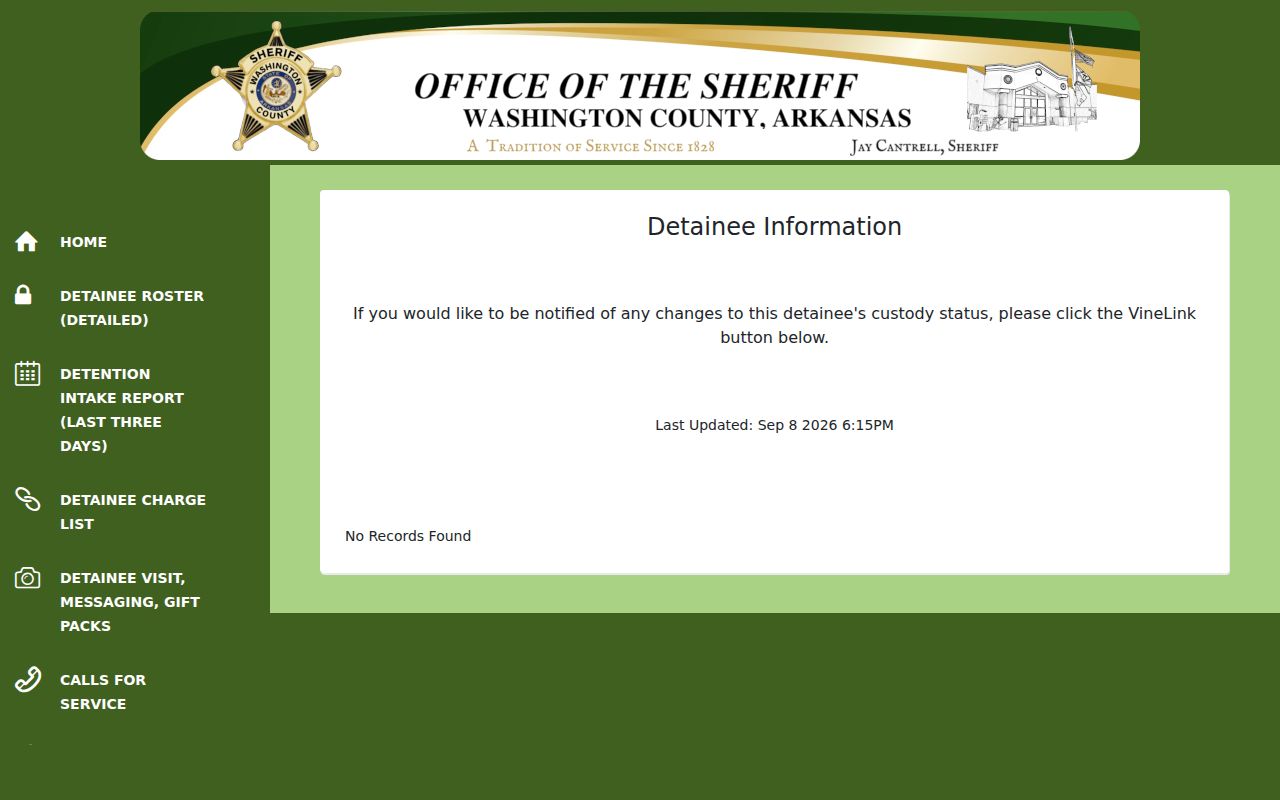
A detainee entry may show custody, charge, or hearing details. It is not the warrant record, though, and only the Washington County court can confirm what stands.
Safety: A public listing never authorizes a private person to approach, follow, detain, or attempt to arrest anyone.
Washington County Portal Limits
The sheriff portal is the best countywide warrant search in Washington County, but read its warning. It updates only during business hours, so a recent service or recall may not show yet, and every hit needs official verification. A no-result means just that the name was absent from that public source at that moment. The warrant could sit with a city, another district department, a federal agency, or a restricted file. The official Arkansas CourtConnect interface can pull a related public docket, though it does not certify service.
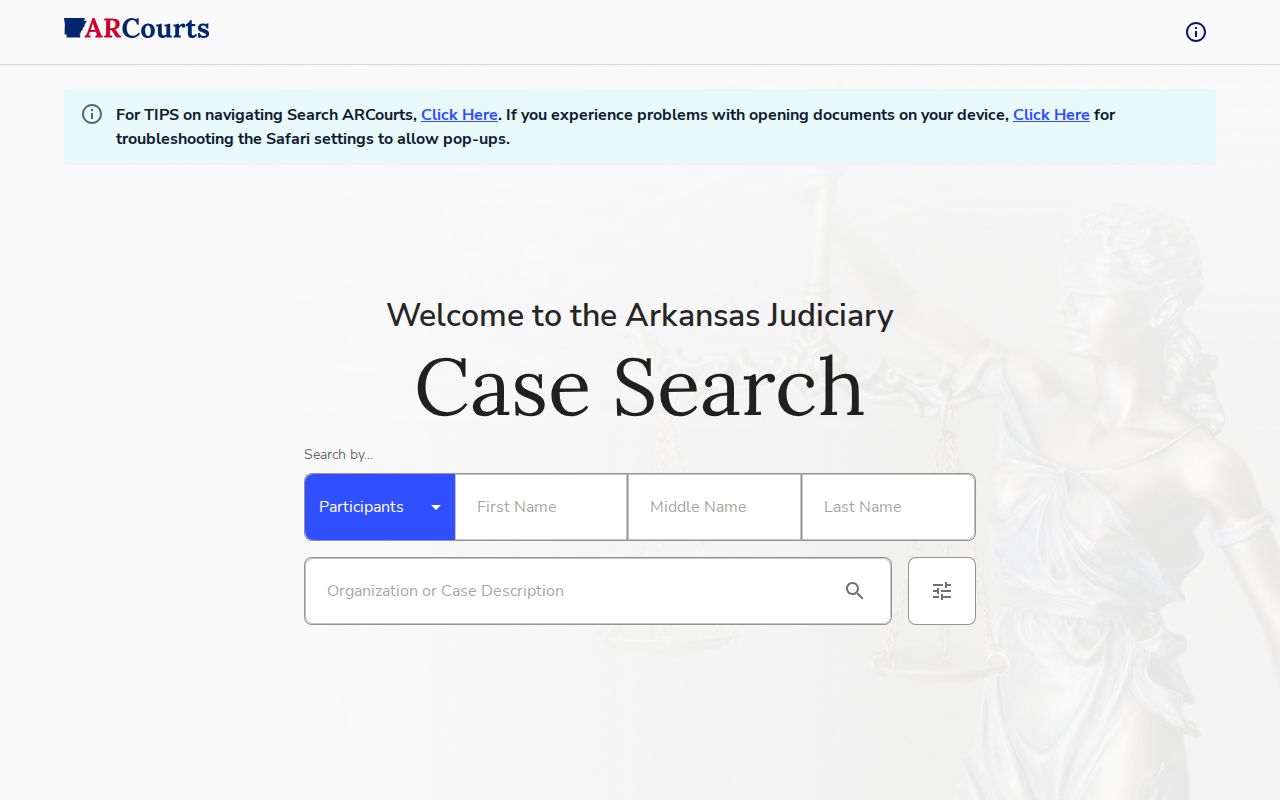
CourtConnect helps you find the court, the case, and the docket entry. Live warrant status still comes from the sheriff or the issuing clerk. Washington County has no public window into ACIC or NCIC; those systems serve authorized criminal-justice agencies only, and Arkansas offers no statewide public search of them. Federal cases run on a separate track, through the Western District of Arkansas clerk or PACER. The Western District of Arkansas Fayetteville courthouse page shows the federal route when a county portal cannot answer a federal question.
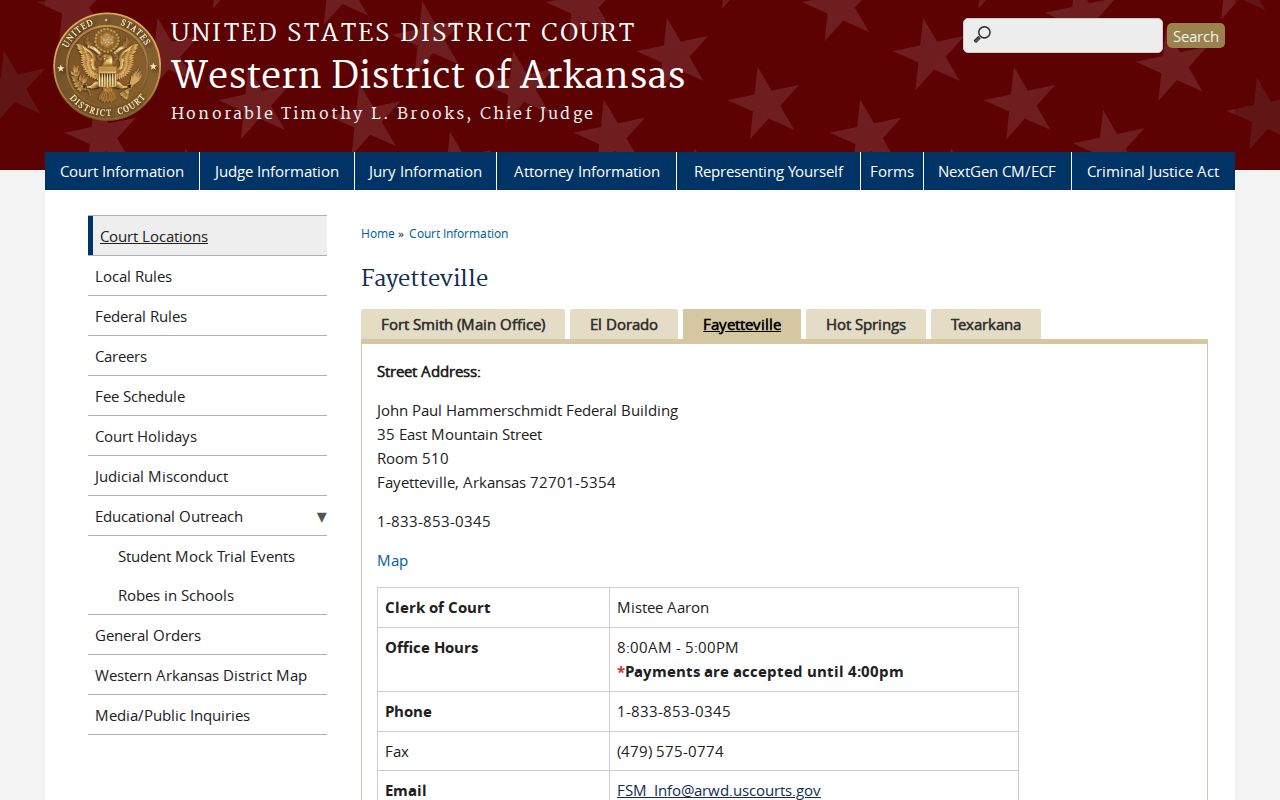
That federal page sends docket questions to the clerk's office. Warrant status itself stays with the responsible federal agency. For Washington County residents with federal filings, the official PACER overview explains the docket system that locates case records.
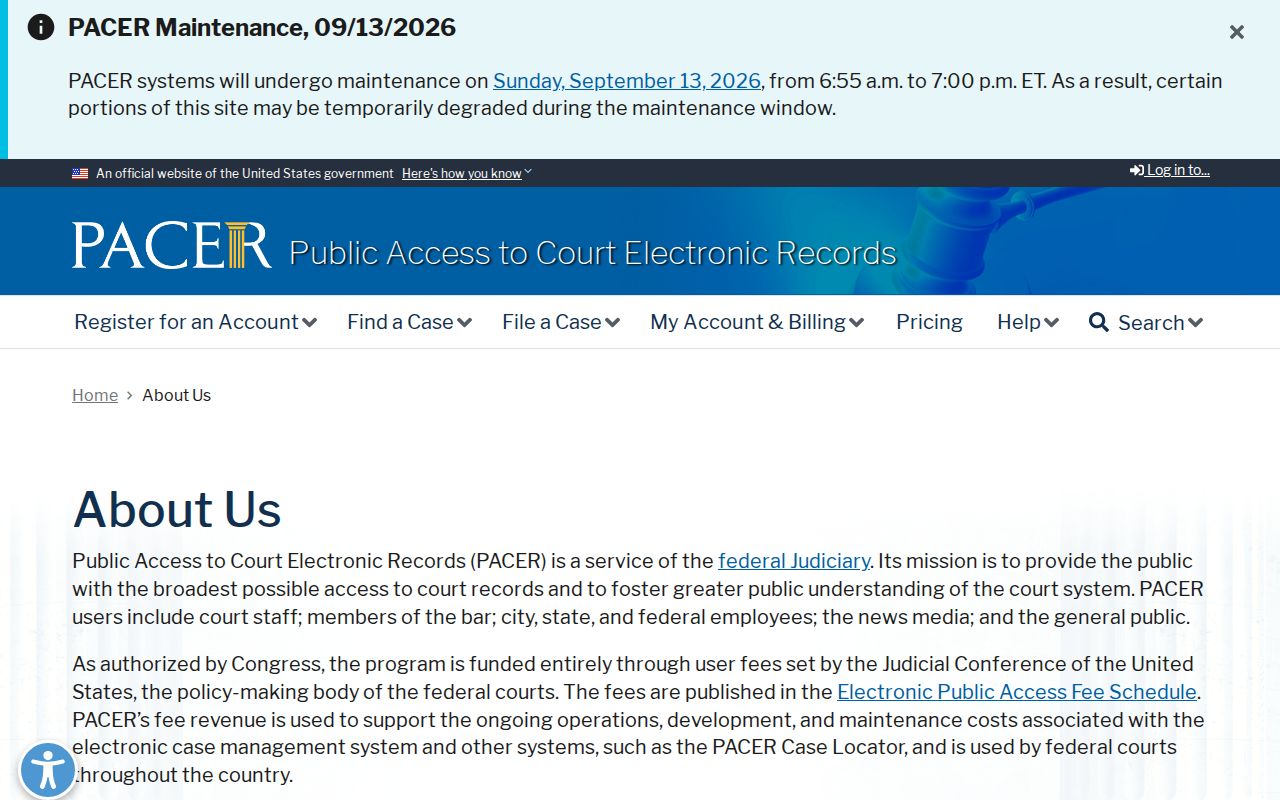
PACER adds filing context. It cannot certify that a federal arrest warrant is still active. The official PACER fee page lists current costs for pulling federal docket documents, so a Washington County reader can check prices before searching.
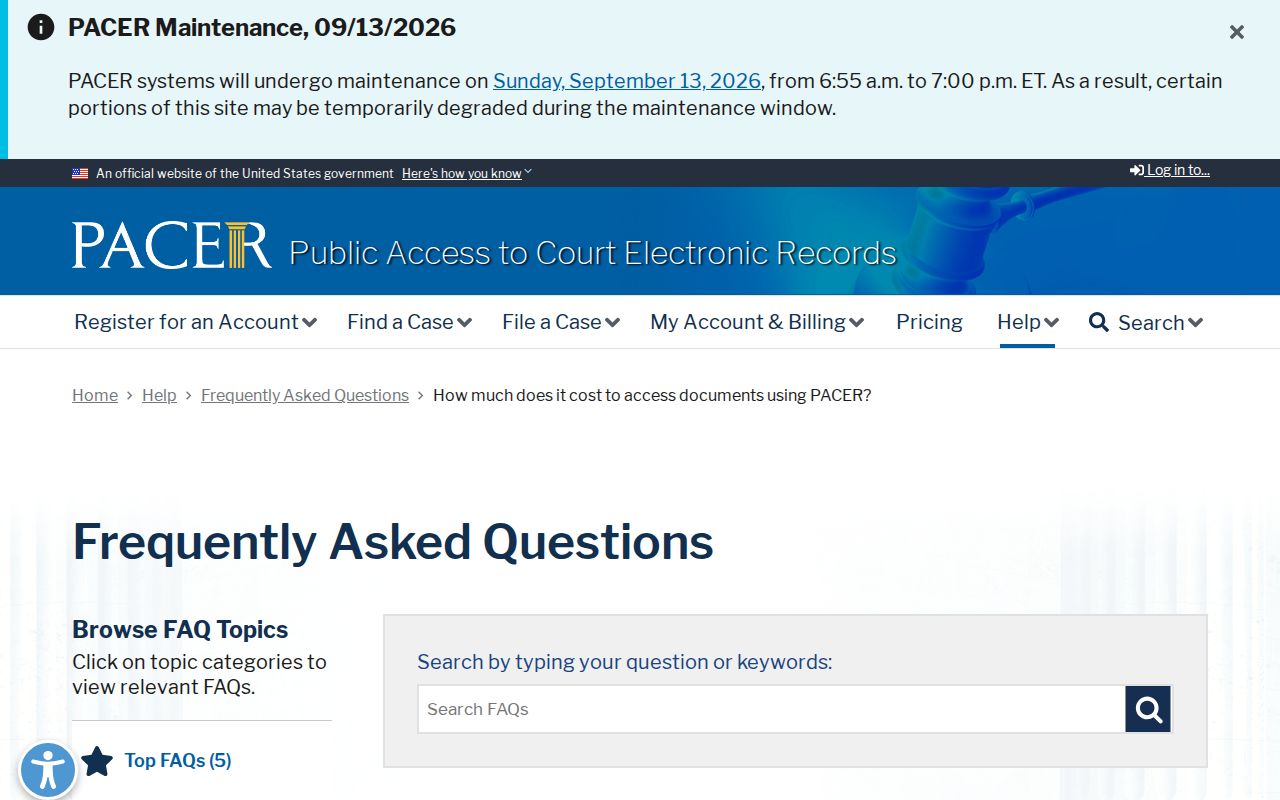
Fees and waiver rules shift over time. Trust the live federal page, not an old quoted price, when budgeting a Washington County warrant search.
Comparing Washington County Arrest Processes
Three different papers can sit near one Washington County case, and each demands its own response. Read the document title and the issuing court name before reacting. A short charge label alone will not tell you the type.
| Feature | Arrest warrant | Summons | Bench warrant |
|---|---|---|---|
| Purpose | Authorizes custody | Orders appearance | Addresses an unmet court duty |
| Basis | Sworn reasonable-cause facts | A charge handled without initial custody | Failure to appear or comply |
| Issuer | Judge | Court or authorized official | Judge controlling the case |
| Response | Confirm and plan surrender | Appear by the stated date | Ask about recall, bond, or a new date |
Miss the appearance a summons requires and a bench warrant can follow. The Washington County bench warrant search walks through that court-based path in more depth.
Washington County Warrant Status Terms
Every status word marks a distinct event. Ask which Washington County office entered it, when it changed, and whether both the court and law enforcement got the update.
- Active or outstanding
- The agency treats the warrant as enforceable, subject to confirmation.
- Served or executed
- Law enforcement completed the directed act; the case may stay open.
- Returned
- Materials were filed with the court, which does not always mean service.
- Recalled or quashed
- The court withdrew or invalidated the process.
- Sealed or closed
- Law limits access to some or all material.
Washington County public records rarely use capias as a label. If your record shows that word, ask the court directly what it means for that case.
Washington County Voluntary Turn-In
Fayetteville shows why the issuing agency matters. Its Warrant Division states that, under normal circumstances, someone who voluntarily turns in on an active Fayetteville District Court warrant may get a citation instead of an arrest and leave without paying money. A citation in lieu of arrest is simply a promise to appear rather than continued custody. Eligibility can hinge on other warrants, safety facts, a judge's order, and current policy. None of this is a countywide promise, though. It does not reach circuit felony cases, other cities, or federal process. Before you go anywhere, ask whether a turn-in is accepted, where it happens, whether booking is expected, whether bond is set, and what papers to bring. Counsel can pull the docket and help plan a surrender in Washington County.
If There Is an Arrest Warrant for You
Verify the warrant directly. Do not try to dodge service. Before you call, gather the legal name, date of birth for private verification, case or warrant number, issuing court, and any summons or release papers. Then ask whether the warrant is active, whether bond is set, and whether the court requires an appearance. Clerks in Washington County explain procedure, but they cannot advise a defense. A lawyer can pull the docket, arrange a surrender, request bond review, or ask the court to recall or quash the warrant. Recall means the court withdraws it. Quash means the court sets it aside. Assume neither result until the court confirms entry and the serving agency in Washington County receives word.
- Call the issuing court or warrant unit first.
- Ask whether counsel may address the matter before turn-in.
- Confirm place, time, identification, and custody procedure.
- Keep any order, receipt, citation, or release paper private.
- Recheck the official source after its update cycle.
Act carefully: An active arrest warrant can lead to custody during police contact, so obtain official instructions and legal advice promptly.
Washington County Bond Confirmation
Washington County publishes no universal bond schedule and no single surrender rule covering every arrest warrant. A figure in the sheriff portal may leave out conditions listed in the judge's order. If the person is already in custody, detention staff and the court can explain the public bond record, but no web result can promise instant release. Probation, contempt, child-support, and federal matters may follow routes unlike an ordinary district-court warrant. Ask what kind of bond it is: cash, surety, personal recognizance, citation, or another court-set condition. Ask too whether a first appearance must happen before release. The issuing court, the current order, and detention staff hold those answers. Tie every confirmation to the right Washington County case number.